Search This Blog

A history of early film making in the San Francisco Bay area.

Photos courtesy of Marin Historical Museum


Actors Posing with camera Crew

Actors Posing with camera Crew
Marin County c 1913

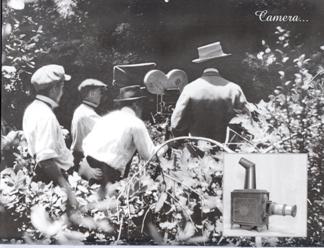
Camera crew films an outdoor scene

Camera crew films an outdoor scene
Deer Park Area c 1914

Actress, Beatriz Michelena

Actress, Beatriz Michelena
Chase scene from "Salomy Jane" c1890

Wednesday, May 19, 2010

Scene 7; Man on the Street Interviews

Yesterday we are took our production company to the main street of Niles to do this show. The guest stars and focus of our "blogcast" are citizens that live and work here.You are about to hear their stories about what Niles means to them and how the movie industry has influenced this place in the past and what is happening now. I posed a few questions to them to get things started;

How long have you lived here? Why did you decide to set up a business and/or stay? What makes Niles special in regards to its connection with the movie industry? Where do yo see the direction of Niles going in the future? Who comes here and why?
------------------------------------------------------------------------------------------------

Our first stop was was "Niles Gallery" that specializes in "Fine Art and Custom Framing". Susan (pictured left) who works there spent a few minutes telling me about how she feel about this place. Susan told me this is a very interesting place to live for a number of reasons. "It's [Niles] part in history and of what happened here overall is why I like it here. People still come because of the movie industry".

She told me about the films that are still made here. Many amateur film producers still come to Niles to film their movies. She recalls they like the old buildings and of course the canyon scenery is another reason film companies come here. Susan related that 'Bicentennial Man" starring Robin Williams was filmed here in 1999. They shot a scene at the old brick factory in the canyon. She felt that the presence of the Essanay Film Studio became the legacy of the town itself. That is the main source of interest to her and why she thinks tourists like to spend time here. Please come in and visit their store. They have a lot of nice things to see and buy! dennis@nilesgallery.com
------------------------------------------------------------------------------------------------
Next, I strolled into Zyt Gallery and met John Agg, the owner of his fine art and custom framing and restoration shop. He does not live in Niles, but wanted to have a store here. What impresses him most about Niles is the townspeople have a fierce pride of this place. In fact they do not consider themselves or their "city" as being part of Fremont! He indicated it is mostly a blue collar community and the people that live here are a very close knit group.

John told me that when Fremont wanted to shut down the post office here, the residents were very upset and protested against the city. As a result they won their battle and the Niles post office is still officially a separate address. They wanted to preserve the uniqueness of Niles and the history it represents, especially the movie making business.

I asked John how he became involved with city affairs here. He told me several local museums asked him to sit on their board of directors. He related the chief function of the local museum, Niles Essanay Film Museum is to raise money to keep it going, and to preserve and acquire more silent films that they show in their theater every Saturday night. He said, "The problem is money, the city needs more than the locals can give. Also, it's a marketing issue".

To attract people here, he mentioned that the Plaza Museum and train station was rebuilt recently. It definitely attracts weekend tourists so they come and spend their money. He told me there is a connection between the residents and the movie industry that they want to capitalize on. To that end there are displays of documents, and photographs, restored buildings, and of course the films themselves that reveal the past.

John likes what he describes as the "warm and friendly people" here. He had businesses in Menlo Park, but likes the slower, small town feeling Niles has to offer. As to the future of Niles, he is hoping more retail stores and residence dwellings will be built in the town. Also, the city "boosters" have regular events such as "Charlie Chaplin Days" when everyone dresses in costumes and has a great time reliving the past, and watching silent movies in the museum theater.

Next time you need something framed, please visit John's store, Zyt Gallery! http://www.zytgallery.com/
------------------------------------------------------------------------------------------------
The next stop on my stroll of Niles Blvd. was Keith's Collectibles. The minute I walked in I had a sense of the local history based on the books I saw that were written about Niles and other collectibles, ephemera and artifacts reflecting Niles past. In addition this antique store has whimsical old toys from my past (growing up in the late 1950's-early 60's) and many other interesting things that makes this shop a really fun place to spend some time.

The antique store itself is a sort of collective where antique dealers rent space to sell their items. While there I met Gordon Wolfe and asked what his impressions were of Niles and how the movie industry has affected it. He said, "For the people of the town, it [the movie industry]means a lot.". He indicated that the past is still with the town as evidenced by the silent movies. In addition the actual studio bungalos are still standing. In fact, Broncho Billy's bungalo is still here and people come and take pictures of it and the town all the time. "It is their way to reconnect with the past", says Wolf.

He also noted independent film makers still come here and use the buildings to shoot various scenes. He told me the main connections with the past revolve around Broncho Billy, Charlie Chaplin, and the Essanay Film Company. I asked him why, and Gordon replied, " Niles is an oasis of history. I call it an island that is separated from the other communities because it was the original Hollywood". He related that is what makes this place very special.

I asked him where he saw Niles future going. He is hoping Niles will grow and shop owners will work together with the historical associations to make this place a destination. Gordon said, "For a long time this place was nothing. It was only dirt before, just biker bars and a few old run down antique stores and shops." He went on to say "After 1967 a weekly antique fair was started and that was when more tourists started to come here".

Next time you visit Niles, be sure to visit Keith's collectibles. Seeing their antiques and thumbing through the local "history" books will definitely give you an insight as to what this place is and was about. Looking out the window, you can see the train station across the street which also adds to the "Old West" feeling of the place. http://www.keithsbooks.com/
------------------------------------------------------------------------------------------------
As I progressed down the street I walked into a shop that I found out later had quite a history of its own. There, I met Nancy Ficker who owns Crystal Aerie which specializes in statues and figurines for the home or office. She has a huge selection of minature lighthouses and Walt Diney characters as well on display for sale.

Nancy and her husband owned a hardware store here about 30 years ago. After he passed away, she opened the present store on her own where their hardware store originally was. She has seen many changes take place in Niles over the past several years. There were more little businesses such as restaurants, a bank, and other mercantile stores. After the auto plants closed the local economy was deeply affected. "Now things look brighter, and the [town's] future looks good", she says.

Nancy claims that due to the economy, things have slowed down a bit. The town's connection with Charlie Chaplin and the Niles Essanay Film Museum's showing of weekly silent films bring tourists, the merchants need to keep their businesses going. She is looking forward to developers building more stores and homes that will attract people to live here. She is happy about the trains, parks, and restored baggage station that bring more tourists to the area to shop and support their local economy.

Please visit her store, Crystal Aerie and see all the fun things she has for sale! crystalaer@comcast.net
------------------------------------------------------------------------------------------------

The last shop I visited was the Co-Op Gallery run by members of the Fremont Art Association. They have been there 26 years and are locals that get together and create and sell their works in the gallery. I spoke with two members, Grace Rankin (left) and Donna. I asked what they thought Niles means to them and what its connection with its movie past was.

Grace indicated Niles has been changing over the past 3 years or so. "Out of towners" as she calls them, have very little knowlege of what this place is about, but they enjoy being here. She is relieved there are less bars in the town and is happy more antique stores and art galleries have opened up here in recent years. She is glad there is much more emphasis on the town's history as a theme to promote tourism here. As a result Grace has seen more people coming to visit not only from the local Bay Area communities, but many come from out of state as well. "People make special trips on Saturdays to see the silent films shown at the museum's movie theater".

Donna agreed and said, "Niles has a special feeling, and unique quality. You know you're in Niles." After we chatted awhile, Grace showed me some of the local artwork that is displayed in their gallery. She mentioned many artists try to capture the feeling of the town's past through their art. There were many depictions of life during the silent movie era with portraits of Charlie Chaplin and other famous figures on display.

Please plan a visit to the Co-Op gallery. It is definitely worth your time! Seeing the local art displayed will give you a sense of not only the movie industry's past, but Nile's rich history, in a larger sense that connects everything together with the present time as well. Please see gracenjack@att.net and gracenotesbygracerankin.blogspot.com for more information.

------------------------------------------------------------------------------------------------

Lastly fellow student, Kevan Santos and I stopped in to Broncho Billy's Pizza Parlor for some lunch. While sharing a great pizza and consuming mass quantities of delicious calories, we reflected on our experience in Niles.

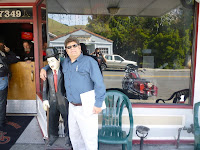
We discovered the town's history is everywhere! In this old building you can see it reflected in the original film posters on the wall. At the local bar down the street, there is a statue of Charlie Chaplin in front of the place (see pic above of me, taken by K. Santos). At the town's center is the Niles Essanay Film Museum that has photos, ephemera, and shows silent films every weekend. It's main function is to keep the town alive and make people aware of Niles historic past as the original "Hollywood" before the movie industry moved to southern California after Essanay shut down the studio in 1916 due to financial problems.

Even the fire station is a part of the movie industry's history. The far corner of the station was the site of Broncho Billy's office in the old Essanay Studio building. (See left pic below). There will be a plaque erected on the building that will mark the spot very soon.

To sum it all up, what does all this mean? What is the significance and importance of this project? Why did I take the time to do it? More importantly why is it my strong desire to make it worthy of your time to follow and read my postings in this blog over the past several weeks? For starters, please click on the image on the right. It is the Niles Essanay Film Museum's mission statement. It talks about rediscovering the past and keeping the spirit of Niles alive. Frankly, "So what?" you may ask. It's a fair question and I will do my best to answer it for you.

It has been an honor, and a pleasure for me to finally "be"a historian rather than impassively just reading about history. This is my first time actually getting out there and contributing to history through hands on research and then having a "stage" to share my findings with you. That in itself is very gratifying. But there is a lot more in the big picture of today's historical thought. My History professor, Dr. Linda Ivey, says, "History is now taught from the bottom up." In other words, traditional American history in many cases was taught from the top eshelon's view from government and other sources.

Now, more historians are evaluating the works and experiences of "ordinary" people and looking at history in a new way through their eyes. By doing so, we gain a rich new perspective on how things were and perhaps interpret the meaning of hisitory in different ways. Historians (and especially budding student historians) are always looking for new topics and avenues to explore in order to gain deeper insights into the human experience. This research may take the form of examining the happenings of a small town, or a particular event, or in my case an extinct film studio and the town that hosted it! Even though Broncho Billy and Essanay Studios are long gone, their legacy will always be with us if it is properly preserved and continually explored.

My intent in writing this blog was not to thoroughly examine every aspect of the film industry. There are already fine authors like David Kien and local museums that have done a great job are still finding new discoveries already. My own discovery and contribution to their work is to show how history can continually define a community, rather than traditionally examining a community that simply sprang from its history. Many historical places have very little in common with the present, outside of a name on a plaque attached to an old building. Niles is different in that regard.

I am proud to say my blog represents an effort to showcase a community such as Niles that is still being defined by it's own history. It is not static! The difference is the people of Niles have begun to actively utilize the past to revitalize the town's future. Through embracing its history, the town and its people are ultimately taking important steps to insure its future survival. From there, history will continue, and Niles will never become a ghost town and be forgotten.

At this time, I wish to thank the townspeople in Niles for sharing their time, thoughts, stories, hope and dreams, with me. Now it is up to them to make history in addition to what they already have.

This has been a Collossal Blog Production. I'm Maurice Lieberman, your "Man on the Street"....signing off.

CUT! PRINT! THAT'S A WRAP!

Sunday, May 16, 2010

Scene 6; And Now a Word from Our Sponsor!


Welcome back! On today's studio tour, we are going to "shoot" a commercial. Our sponsors are needed In order to keep a huge operation going like this one. Ok, stand back, please keep off the wires and don't bump into the equipment!

Now I have a big surprise for you! Today, you will take part in this commercial by being in our live studio audience! All you have to do is clap and yell wildly when you see the "APPLAUSE!" sign. Now, please follow me to the taping room and find yourself a seat. On with the show. Oh, I forgot to mention I was able to get Don Pardo, you know.....the guy who announces "Saturday Night Live!" to do our voice overs (off stage announcing).
Quiet on the set!..Standby.....Places everyone! Where's that script writer? Tell him to stop fooling around back stage with those chorus girls from Set #2 and get back here! Time is money, you know!

Lights!.......Camera!......Action!

3 ,2, 1! Don, you're on the airrrrrrrrrrrrrrr! Queue announcer! (thanks to simulcast, of course!)

"Live from "The Niles Essanay Silent Film Museum", located at 3747 Niles Boulevard in the beautiful downtown Niles District of Fremont, California....... I'd like to present the host of our infomercial.....Maurice Lieberman......and now MAURICE LIEBERMANNNNNN!!!!!!

(APPLAUSE!) Lots of applause!! MORE!!! OK, now go crazy!!!...That's enough! Sit down!

Queue Maurice....Quick, sound man.....turn up his microphone!

"Thanks Don. It's great to be here at "The Niles Essanay Silent Film Museum" and host this show on behalf of Colossal Blog Productions and of course our sponsor, "The Niles Essanay Silent Film Museum". (APPLAUSE!)

Today, exploring this great museum. The longer we spend looking around, it becomes apparent there is more to this place than simply displaying items and events of the past. They also have a purpose as to what they do and why this museum is here. So, are we ready to experience something very different? (APPLAUSE!)


Looking through their store you can browse through informative books, fascinating artifacts, see colorful posters and (black and white) photographs of the silent film era. Their extensive library and book store covers many aspects of silent movie making, planning and production. There are books about the early film stars that became famous and brought the movie industry to life here in Niles. It was renown film stars such as Charlie Chaplin, Ben Turpin, Fatty Arbuckle, Greta Garbo and of course the founder of the essanay Studio, Broncho Billy! You will rediscover these early pioneers of film by watching early silent movies in "The Niles Essanay Silent Film Museum's very own theater! Now, you too can take part in keeping the spirit of these films with us. Here's how..........(APPLAUSE!)

There is an even higher purpose as to why this museum is here. We already know "The Niles Essanay Silent Film Museum" is committed to preserving the rich history of silent film making. However, more importantly they wish to preserve the actual films directly themselves.

("APPLAUSE!") Leonard Maltin is a nationally known historian of movie making and states," in his article "Leonard Maltin IN Focus 1996, published in the museum website, "Too many films are biting the dust, literally". See MOVIE CRAZY at http://www.leanardmaltin.com/ for more details

Maltin details on how films were made. Up to the 1950's nitrate cellulose was used in the constructing reels of film. It was a very dangerous and highly flammable material that would catch on fire from prolonged use of movie projectors, because of the high heat they generated as film would stream through them. Many theaters known as "nickelodeons" where lost from the turn of the twentieth century well into the 1930's. This happened due to explosive fires caused by excessive heat generated by projectors in the confines of a very small projection room. Lives were lost because patrons could not escape the flames that engulfed the theater do to the prevalent use of nitrate cellulose film.


Later, theaters implemented the use of fire retardant materials to line the projection rooms. Many were eventually lined with lead or tin to prevent the spread of fires to the main theater areas. You can see examples of this construction at "The Niles Essanay Silent Film Museum" in the upstairs projection room. Some of the old films have been preserved and locked away in specially temperature controlled sealed vaults in Hollywood movie studios, like Warner Bros, Paramount, and Universal Studios.
"The Niles Essanay Silent Film Museum" is raising public awareness by preserving and restoring these precious and irreplaceable works of Chaplin, Broncho Billy and the old Westerns of the Snakeville series. These works and many others continue to capture our hearts and give us a feeling of "old" California. They tell the stories in an epic way about an earlier time in America as well. That is what the "The Niles Essanay Film Museum" is contributing to the local area in addition to California's film making history in a much larger sense. (APPLAUSE!)

Now, they need your help to continue to make this happen for you as well as future generations of movie goers that will only experience media through special effects and computer graphics!

Please vist "The Niles Essanay Silent Film Museum" today and make the magic happen for yourself. You will be making a contribution to a very worthy cause while preserving a piece of history that is in danger of being lost forever. See it today! Back to you Don!" (APPLAUSE!)
Fade out.....cue the announcer!

"I'm Don Pardo, thanking you for spending time with us to explore "The Niles Essanay Silent Film Museum" through this infomercial. This program was brought to you by our sponsor, "The Niles Essanay Film Museum" in the making of this program possible. This has been a Collossal Blog Production in association with our source of scripted materials, (last time!) "The Niles Essanay Film Museum" . This is Don Pardo, signing off and wishing you a pleasant tomorrow!"
(APPLAUSE!)

CUT! PRINT! That's a wrap. Strike the set!

You were a wonderful studio audience. Please watch your step on the way out and be sure to pick up your brochure at http://www.nilesfilmmuseum.org/ for more information of coming events. See you next time!

Monday, May 3, 2010

Scene 5; Why Pick Niles Canyon for Essanay Studios?


Let's continue our studio tour. Let's begin with a little local history about Niles itself. The land where we are standing belonged once to Jose de Jesus Vallejo (c 1840's) in which he owned 17,000 acres called Ranch Arroyo de la Alameda. Later this place was known as Vallejo Mills. There is a creek here that once provided water power to grind wheat that was grown in fields close by. Orchards eventually took their place and Vallejo lost his land due to debts he owed to a man named Clark. )
Clark sold his land to The Spring Valley Water Company because they wanted the water rights.(Source:"Broncho Billy & the Essanay Film Company" by David Kiehn
During the late 1860's the railroad came to town. Niles Station was built by the Central Pacific and named the depot after a local attorney, Addison C. Niles. In 1871he later became a Justice of the California Supreme Court.By 1884 the Southern Pacific Railroad owned the land and a town gradually began to take form. Hotels,stables, churches and of course saloons were built. In addition barbershps, a general store, cobbler, and other businesses came to Niles Canyon (originally known as Alameda Canyon

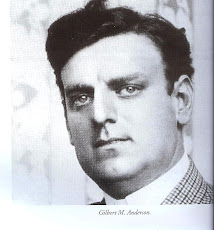
It was 1912 when Gilbert Anderson (Broncho Billy) brought the Essanay Film Company to the little town of Niles (the word "Canyon" was now dropped from the town's name).>

The studio was originally located in Chicago, but with constant inclement winter weather and a lack of natural light,coming west was the perfect solution. California offered not only a moderate year round weather pattern, but it posessed beautiful natural scenery as well. Of course Anderson did not count on the cold foggy and rainy weather we have in Northern California, but it was certainly better than what Chicago offered. Essanay Studios initially shot several movies in southern California. Anderson decided he wanted to live in San Francisco, so it made sense to look for a location to relocate his studio near his home. Enter Niles.........


There really wasn't much to the place in the way of industry except a 600 acre nursery known as California Nursery and fruit orchards. Upon arrival, Anderson promptly met with the president of the local bank(Bank of Alameda County)August May, the local newspaper editor ("The Register"), and the owner of the local saloon, Billy Moore. During this meeting it was decided that an empty barn was to be Essanay's first studio, located on Second Street.


Anderson negotiated with the townspeople to buy land for his studio in the immediate down town area between Front and Second Streets in Niles. He tore down orchards and built bungalows and other buildings needed to make movie sets.During this time they started filming their movies, complete with cowboys, stagecoaches, and of course the local saloon was used for the bar scenes.

The locals became used to the comings and goings of the studio crews, camera men and the actors rehearsing their lines and shooting various scenes around town. The problems came when tourists and visitors would get in the way and scenes would have to be shot over and over until someone chased these unwanted "guests" out. Obviously, sets were not elaborate as they are today. They would use local buildings after asking permission of the inhabitants. Most sets were reused after being repainted or changed in some way in order to match the scene they needed for a particular day. The surrounding hills and canyon added a realistic back drop as well. Muslin cloth was draped overhead to defuse light and glare from the sun.

According to David Kehn's book, Anderson never used more than 2,000 feet of film to shoot his movies. Stock footage was used over again in many of his films to save time and money. This also gave him personal time for personal appearances and traveling, because he would shoot 5 films in six days.

Some actors were paid salaries of $25.00 per week, and supplemented their income by acting as movie extras which would yield them an additional $3.00 per day. Some featured character parts paid an additonal $5.00 per day. Anderson did not like to pay for script writers if he could get scripts from other sources. He searched through pulp magazines and even the Oakland Public Library according to Josephine Rector who was the head of Essanay's one person scenerio department (Source; "Broncho Billy and the Essanay Film Company" by David Kiehn).

On our next tour we will talk about more Essanay studio history,the films,and actors that have left their imprint on this special place. Until then....happy trails.

Saturday, May 1, 2010

Scene 4; Brief Intermission


Welcome back to our studio tour! We will resume our journey into the past and see the rest of our (virtual) studio and review the actor's histories and activities. But first, before anyone embarks on any journey, whether it be a trek into the past, present or future, it is important to understand the reasons for doing it.

I have made several trips to Niles and am enjoying researching the history of movie making here. But, why is it so important? Is it because so many famous actors lived and worked here, and some of the most memorable movies were made and filmed in Niles? Is it because it is a major part of California history? Is it because our local history of major events should be preserved and chronicled for future reference? Is it because as historians we want future generations to know and understand what happened here and why?

Yes, it is all that, but there is something else..... Something intangible, something unique that only the people who live here can truly appreciate. The last physical remnants of the Essanay studio buildings are gone now. The old hotels, studio sets and surrounding buildings are in the past and have been replaced. As I walk down Niles Main Street, I see restaurants, bars, and shops that have replaced the structures where dreams were made, and where fantasy flourished. Broncho Billy and his posse ride no more. At first glance only the names of the street's businesses give a hint of what was once here.

As I spend more time here, I begin to see clearly that this place's past is still with us. As I speak with the residents and townspeople I sense their great pride in Niles, and their desire to preserve and rebuild this historic district of Fremont. They are rediscovering and exploring the past. What is truly remarkable is that they consider it "their" past. This place is revitalized and very much alive!

As you walk the main street, and visit the antique stores, and museum you are at once transported back in time. It is 1912 once again and you gain a sense of what Essanay studios accomplished here when Charlie Chaplin, Wallace Beery and Ben Turpin walked along these same streets. But there is so much more!

Niles has been here since the 1850's when the Southern Pacific railroad connected Oakland with San Jose and points south. Niles was also well recognized as the location of the California Nursery. As such it was the home of largest rose plantation in California. So,it is a combination of this area's rich history,and pride of its current residents that make Niles so special and appealing. Its history captivates anyone who visits here. This place has an atmosphere and historic character that compels one to explore it.

There are lots of historical places that you can visit and read a plaque or walk through a museum to gather historical facts. What sets Niles apart is even though "history" happened here almost 100 years ago, everyone that lives and works here is affected by it still today. It is a living history and that is what makes it so exciting and meaningful explore. That is why you are here with me on this studio tour! It is exactly the history of Niles Canyon that makes it the thriving place it is now.

But there is one more thing......... To really appreciate being in Niles it is necessary to "experience" Niles. The only way to do that is by viewing Charlie Chaplin's as well as some of the other works of the same genre. This journey through time is not complete until you can sit back, relax, and watch these people weave their magic on your mind. Only by seeing these old films can you get a feeling for this place as you walk the streets, and visit the Niles Essanay Silent Film Museum.They show silent films there every week. On June 5, 2010 they will be having a Charlie Chaplin film festival featuring his most famous films.

I hope you will join me in this unique opportunity to transport yourself back to 1915 and let the spirit of Niles envelope you into its history, rather than simply remotely viewing it as just another event in California's colorful past. I will also be posting films for you to see in the "Projection Room" once my new projectionist learns how to operate that infernal machine! (I had to fire the old one!) Seeing the dedication and passion these actors put into their early film productions makes us understand why this connection with Niles's past is also its present and future.

Now....on with the show!

Tuesday, April 20, 2010

Scene 3 "Second Stringers" Source Review


Quiet on the set...QUIET ON THE SET! Action.....Roll 'em!

The plot...oh yes,every story must have a plot, and of course a "Colossal Blog Production"(CBP)is no exception! So why is this topic worth exploring? Why should we care about movies that were made nearly 100 years ago? Is it still relevant to our lives in this modern age of CD's,DVD's, portable movie players, and Netflix?
The answer is very simple really. But first, let's ask ourselves, "Why do we associate movie making with California?" I think that is a good place to start our quest for answers to your questions. As your (part time) studio guide today I will be glad to guide you in this marvelous journey through time. We will be especially interested in the time period between 1896 and 1916, when the cameras stopped rolling and Essanay Studios finally closed its doors forever in Niles Canyon. Later, Los Angeles became the hub of movie making in California and a new era of talking pictures was soon to arrive.

I do have a busy schedule running this blog production company so let's begin our tour. California is about much more than a composite of crowded sandy beaches, "Gidget" surfing the waves while basking in the sunshine,scenic topography,fancy houses and exotic cars,extremely diverse cities(Berkeley,S.F.and L.A. are great examples),exclusive exports(Oranges and computers!),Beach Boy music(Don't forget Jan & Dean!), movie stars (not to forget mentioning our "Governator", Arnold), and of course the rest of our very own "unique" people. It is both a place and a dream for people to visualize,visit,and stay if only in their minds. Even the name "California" has mystical origins.

As we enter our imaginary sound stage, we view our set; Please...relax...sit in my Director's chair and watch what's unfolding in your mind's eye. Cigar? I have one of Broncho Billy's favorites! A slug of gin perhaps? OK,but first...MAKE-UP!! Places everyone! Hurry up! Lights! Girls enter stage right!Take One!

The time is circa 1500's. We are on a beautiful tropical island with gorgeous,and topless(ok,I put that in to get your attention!)black women Amazons that are ruled by the mysterious Queen Califa. These ladies were known for their robust, healthy bodies basking in the warm sun (now are you getting the idea?). They had spears and scepters made of pure gold that came from a nearby mine. Eventually this magical place became known as "California" thanks to our Spanish script writer named Garci Rodriguez de Montalvo. In 1510 he wrote a romance novel, "Las Sergas de Esplandian (Adventures of Esplandian). Honestly,even I could not make something up this good!His book is what inspired Hernan Cortez to explore the coast of "New Spain" in the 1530's, and claim for Spain the land which is now our state of California. The Spanish named their newly discovered land "Las Californias", then later it became "Alta California". So finally, this fictional land became a real place.

OK! strike the set now! Follow me please to the next studio. "The unwritten Law" is being filmed(see explanation below).We're just in time. Careful! Watch your feet! I don't need a virtual law suit!

California which was once thought of as a mystical island was in fact a living paradise. (However the glamour girls came much later!) The point I'm making here is this place was and still is a land of dreams and fantasies, inhabited by real people. It is no wonder why the magic continues to happen here in our studios, on film, and why the movie entertainment industry ended up here centuries later.

Once established, and especially after the 1849 Gold Rush, California became the west coast mecca for business, agriculture, tourism and eventually film making. ("California, An Interpretive History" by James Rawls p 1-16). It is very important for me to note the contributions to California's economy, and the notoriety of the stars that made motion pictures here,but there is an even more important issue at stake. The movie industry made a huge contribution in preserving California's history by reflecting the attitudes, styles, politics and our way of life through film.It is only through this medium that we can visually look into the past. These films are the time machines in which we can interpret as well as be entertained by our own history. As such we will examine the personalities and characteristics of the actors, the scripts,movie titles,and the stories they continue to tell us. This is one of the reasons I have undertaken this project.

Their triumphant stories of good over evil, generosity vs. selfishness, greed and avarice vs. charity, love overpowering hate are their legacy. They still live in our hearts today. Through the looking glass of a film camera any historical time period can easily be re enacted, and life's continuing stories can be witnessed on the silver screen. How else can one see what San Francisco looked like before the 1906 earthquake? Only through the movies can you witness how San Francisco became a bustling Gold Rush town,and be there during "The Great Train Robberies" of the early 20th century. You can place yourself in the Old West,or comment on the political satire of Charlie Chaplin when you see him appearing in "The Tramp" c.1915. Most important of all,through film you can experience the feeling and emotion of an historical event as if it happened yesterday instead of "yesteryear".

Another reason I chose this topic is because much of it happened right here! Film making is a documentation of local northern California San Francisco Bay Area history in itself. As such, it should be preserved for our enjoyment and utilized to educate future generations about who we are as Californians today. What we see on film is the mystic roll call of those that will come no more, but their message lives on. I too wish to capture some of the romance of California in the novel de Montalvo wrote in another golden age,so long ago.

Fade out on camera 2...Cut! That's a wrap for today!

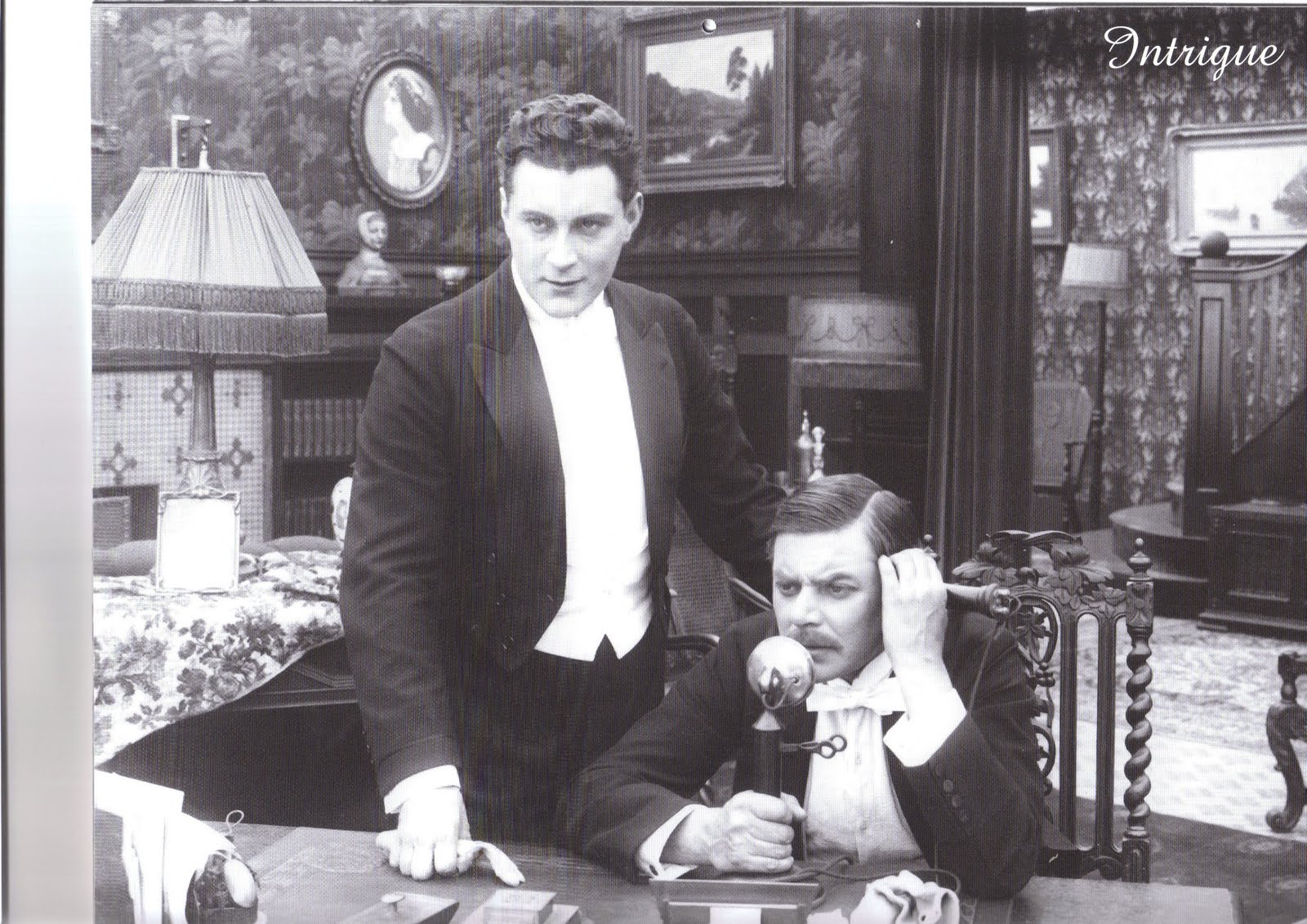
Director's note: Pictured above are actors William Pike and Albert Morrison in a scene from "The Unwritten Law",1916; California Motion Picture Corporation. This film was based on a true crime story of the Stanford White/Harry Thaw murder case. (Photo donated to the Marin History Museum by Roy Farrington.)

Tuesday, April 13, 2010

Scene 2; Drama on the Internet

Hello movie fans!

This last weekend, I started my research of the movie industry in northern California, and why it settled here. As I was "surfing" the net, I came across a most interesting site that had pictures and stories of the people and events that lead up to the movie making era that occurred in this area. As a result I found these wonderful photos (see above) to introduce my theme.

The top photo(Lights)was taken during a film shoot(c 1913).Please note the early film equipment used with the film canisters. That is so ancient in comparison to the digital filming methods used today. During our film journey into the past, we will be exploring the use of the film equipment used during this early period.

The middle photo (Camera) was taken c 1914 (Sanborn/Frustuck Collection, Fairfax Historical Society)while filming a motion picture in Marin,California. We will also be researching the many local areas that were used for making movies. California offered warm weather and (fairly) consistent sunshine that was essential for providing the natural light necessary for decent filming using these inefficient cameras. Unlike "electronic" computerized cameras of today, they were very basic and simple. They could not adjust well to the lighting available at hand, so ideal "natural" conditions had to exist before any filming could be done. The inset photo shows a "magic lantern" c 1870's which was the earliest form of slide projector. It gave a very crude impression of motion to the viewer,with a lot of imagination on the viewer's part! (Sanborn/Frustuck Collection, Fairfax Historical Society)

The bottom photo(Action!) shows a well known actress of the day, Beatriz Michelena
(in the boat). The actress in the inset photo is unknown. Many of the actors and actresses did their own stunts. As a result many were badly hurt, as Beatriz was many times during her filming career. The photo was taken during the filming of "Salomy Jane" c 1914 on the Russian River. (Fairfax Historical Society)
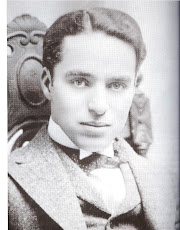
We will also examine the early film actors and actresses that made the silver screen come alive. Charlie Chaplin, and Gilbert Anderson (aka Broncho Billy) were notables that made major contributions to the early film industry.

They were also businessmen that greatly contributed to the local economy by bringing film making into our back yard. They were instrumental in setting up studios and in so doing were responsible for hiring local citizens of Hayward, Castro Valley,and the surrounding townships.For example,Essenay Studios was established in Niles Township in 1907 and the studio produced four movies per week on average! Because of the film making industry, local carpenters, horsemen, blacksmiths,restaurateurs and other small companies and workers flourished. So,we will examine the effects on the local economy during the height of the film making era here and afterward in the coming weeks.

On Sunday, April 11,2010 I visited the Niles Essanay Silent Film Museum. located in Old Town Niles in Fremont,California. I met several wonderful people that are anxious to assist me in putting this project together.I met and interviewed the President of this organization and two of the docents that are very enthusiastic about preserving this piece of local history. I will script(post)my findings in a later scene(blog).

David Kiehn, author of "Broncho Billy and the Essanay Film Company" was there for a special showing of old movies to a historical group that was there in costume. I will post these photos later. He signed his book for me, and graciously allowed me to interview him as well about the contents of his book. I will certainly be using it as part of my research, as well as continuing to visit with him about related topics. All in all it was a really fun and informative day. For anyone that is interested in early film making this museum is a must see!

Saturday, April 3, 2010

Opening Scene 1; Biography

This is my first blog and I wish to introduce myself. My "leading lady" starring in the photograph is my wife, Elena. I am an undergraduate U. S. History Major (Senior) student at California State University East Bay. History has always been a fascinating subject for me. I like to travel and have visited over 75 countries with Elena over the past several years. So, it makes perfect sense for me to understand and know what I'm looking at in the places I visit around the globe. Most importantly studying History helps me to understand the various cultures enveloping the people I meet and interact with during my travels and at home.

In addition I utilize historical research in my work as an expert witness and legal consultant to attorneys regarding insurance matters. I hold four professional insurance and financial planning designations, and have been involved in the financial services industry in various capacities for 34 years. Please click on "My Web Page" and enter my name in the "search members" section for more information on what I do as a consultant on the Forensic Expert Witness Association website.

After several years successfully developing my insurance and financial planning practice, I decided to go back to school and complete my Bachelor's degree, majoring in American/California History. My goal is to graduate June 2011, to utilize and integrate new knowlege into my research work I do as a legal consultant. To that end, I am currently enrolled in a History research class that explores topics relating to events that occured in the San Francisco Bay Area. The specific geographic location of my research will be centered in Castro Valley(Hayward), California, but other related local areas will be examined also.

During the next ten weeks, I will be posting the results of my research on this blog site. The topic I have chosen is early movie making and the start of the movie industry here in this area. Everyone thinks of Hollywood as the "epicenter", but the movie industry really started here around the early 20th century. Only later, Southern California was selected as the ideal spot as an entertainment and movie making center. Many of Hollywood's early movie stars lived and practiced their craft in Northern California first. Charley Chaplin filmed his most famous movie,"The Little Tramp" at Essenay Studios located in Niles,(now Fremont)California as an example.

In the coming weeks I will explore the actual locations of local movie studios, the equipment used and the inventor behind that equipment(Thomas Edison). He invented a lot more than just the light bulb! I wish to explore and identify the early actors,directors,studio locations,and the films that were created here. It will be interesting to see the financial impact the film industry had on the local economy, as well as the entire state during this early film producing period.

I will explore what other residents and industries were directly and indirectly affected and how they participated in the movie industry's growth. Lastly I will examine the after effects of why the movie industry relocated to Southern California. Other topics will include how unions and studio workers fitted in to the scheme of things and their impact on the movie industry as well. I hope to find people to visit with that can remember "how it was" and relate to me their impressions of a very unique time in California's growth during the early twentieth century and beyond.

Please feel free to post any comments or suggestions of where I might look for additional resources and information relating to this fascinating subject of creating California's dreams through the eye of a camera. Lights! Camera! Action!